
- Home/
- Buy Seroquel Online in the United States Safely and Securely
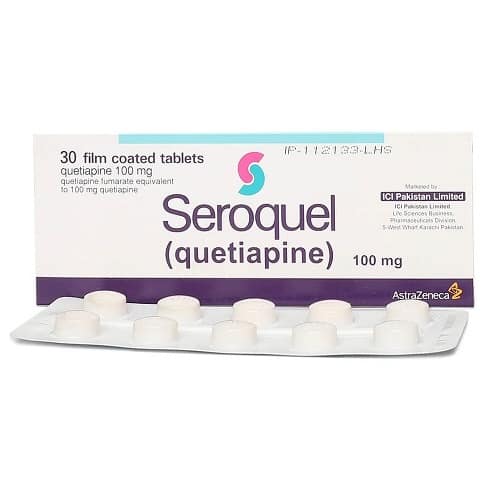
| Brand name | Seroquel |
|---|---|
| Main compound | Quetiapine |
| Primary indications | Treatment of schizophrenia, bipolar disorder, and adjunct for major depressive disorder |
| Strength variations | 25 mg, 50 mg, 100 mg, 200 mg, 300 mg, 400 mg tablets |
| How fast it begins to work | Usually within 1–2 hours after taking a dose |
| How long the effect lasts | Approximately 6–12 hours (immediate-release); up to 24 hours (extended-release) |
| How it is taken | Oral, once to twice daily depending on formulation |
| Prescription status in United States | Prescription required (regulated by FDA) |
| Estimated price range in United States | $15–$150 per month (varies by dosage, pharmacy, and insurance) |
Seroquel for Mental Health: Guidance and Practical Details in the United States
Seroquel is a prescription medicine containing quetiapine, approved in the United States to manage specific mental health conditions such as schizophrenia, bipolar disorder, and as an add-on therapy for major depression. It is legally available through licensed pharmacies nationwide, following an evaluation by a healthcare provider. This guide will clarify when and how Seroquel may be appropriate, address safety and practical questions, and provide practical details on obtaining it in the United States.
Understanding Your Situation: Mental Health Problems Are Common and Treatable
Mental health challenges—ranging from mood swings, persistent sadness, and intense anxiety, to hearing or seeing things others do not—are not rare or signs of weakness. According to the National Institute of Mental Health (NIMH), in 2021 over 21% of adults in the United States experienced some form of mental illness. Schizophrenia affects about 1.5 million Americans, while bipolar disorder impacts nearly 4.4% of U.S. adults during their lives (NIMH, 2021). These conditions are not only widespread but also treatable, with a variety of effective therapies and medications, including Seroquel, available to help restore stability and quality of life.
How Seroquel Works: What It Does in the Brain and What You Might Experience
Seroquel (quetiapine) acts by adjusting the balance of specific neurotransmitters—primarily dopamine and serotonin—in the brain. These chemicals influence mood, perception, and thought processes. In conditions such as schizophrenia and bipolar disorder, this balance is disrupted, leading to symptoms like hallucinations, delusions, extreme mood shifts, or depressive episodes.
- Dopamine modulation: Seroquel blocks certain dopamine receptors, which helps reduce hallucinations and disorganized thinking in psychotic disorders.
- Serotonin adjustment: By influencing serotonin pathways, Seroquel can stabilize mood swings and lessen feelings of depression.
- Practical consequences: Most patients begin to notice subtle improvements within the first week—such as calmer thoughts, less agitation, or improved sleep—though full benefits, especially for mood symptoms, may require several weeks of regular use.
This dual action is why Seroquel is used both for “positive” symptoms (hallucinations, delusions) and “negative” or mood-related symptoms (depression, anxiety, sleep disturbance). Its effects are gradual but often noticeable within days for some symptoms, especially agitation or insomnia.
Does Seroquel Fit My Life? Personal Scenarios for Choosing or Avoiding It
| Situation | Recommended Path | Reasoning |
|---|---|---|
| You have been diagnosed with bipolar disorder and experience both manic and depressive episodes | Seroquel is often a first-line option | Because it is approved by the FDA for both phases, offering mood stabilization and reducing relapse risk |
| You have not responded to other antipsychotic medications for schizophrenia | Seroquel may be suitable | Its unique balance of dopamine and serotonin effects can help patients with partial or unsatisfactory response to other medications |
| You primarily suffer from insomnia without mood or psychotic symptoms | Seroquel is not recommended | Because risks may outweigh benefits for sleep issues alone—other targeted sleep aids have better safety profiles |
| You have a history of severe heart problems (e.g., arrhythmias, recent heart attack) | Seroquel may not be advisable | Because it can potentially affect heart rhythm, and alternative treatments should be considered in consultation with a cardiologist |
| You are already taking multiple psychiatric medications | Careful assessment is needed | Because drug interactions may increase side effect risk or reduce efficacy—consult your psychiatrist or prescribing physician |
This table shows where Seroquel can be a strong choice and where its risks may outweigh its benefits. Always discuss your exact situation with your mental health provider for a tailored recommendation.
Practical Use: Timing, Missed Doses, and Real-Life Adjustments
- When to take Seroquel: Typically in the evening or at bedtime, especially for the extended-release form, as it may cause drowsiness. Consistent timing helps regulate symptoms and minimize side effects.
- With or without food: The immediate-release version can be taken regardless of meals; extended-release tablets should be taken without food or with a light meal (not high-fat), as fatty meals can alter absorption.
- Missed dose: If you forget a dose, take it as soon as you remember unless it is close to your next scheduled dose—then skip the missed dose. Do not double up. Missing a dose occasionally is common and typically not dangerous, but missing several may lead to a return of symptoms. If this happens, inform your provider.
- If Seroquel does not seem to work: Some symptoms improve quickly (like agitation), but others take weeks. If you do not notice any improvement after 3–4 weeks, contact your clinician. Do not adjust the dose yourself.
- What is normal: Feeling a bit sleepy or lightheaded, especially when starting, is common. Gradual adjustment helps your body adapt.
- When to seek help: Persistent faintness, severe confusion, uncontrollable movements, or signs of an allergic reaction (rash, swelling, breathing trouble) require immediate medical attention. See the emergency contact information under side effects.
Practical management of Seroquel in daily life centers on routine, awareness of side effects, and open communication with your clinical team. This is particularly important as your body adapts or if your treatment plan needs to be adjusted over time.
Who Should Not Take Seroquel? Contraindications Explained
Certain health profiles make Seroquel unsuitable. This is not to exclude but to protect individuals from real risks. Here are key contraindications and their underlying reasons:
- Known allergy to quetiapine or any tablet component — because allergic reactions can be life-threatening.
- Severe cardiovascular disease (especially arrhythmias or uncontrolled heart failure) — because Seroquel can prolong the QT interval on ECG, increasing the risk of serious heart rhythm disturbances.
- Current use of certain medications (e.g., potent CYP3A4 inhibitors like ketoconazole) — because they can dangerously increase quetiapine levels in the blood.
- History of neuroleptic malignant syndrome (NMS) with other antipsychotics — because recurrence risk is higher, and NMS is a rare but potentially fatal reaction.
- Uncontrolled epilepsy — as Seroquel may lower the seizure threshold, raising risk of convulsions.
If any of these conditions apply, alternative treatments or careful monitoring are needed. Never start or stop Seroquel without a provider’s supervision.
Main Side Effects: What to Expect and What Needs Urgent Attention
Seroquel’s side effect profile is well-studied. Most adverse effects are mild-to-moderate and often resolve with continued use. Here is a breakdown by frequency and significance:
-
Common and usually temporary:
- Drowsiness or sedation
- Dizziness
- Dry mouth
- Weight gain or increased appetite
- Constipation
-
Uncommon but requiring monitoring:
- Restlessness or muscle twitches
- Low blood pressure on standing (orthostatic hypotension)
- Changes in blood sugar or cholesterol
-
Rare but serious—seek immediate help:
- Severe allergic reaction (swelling of face/tongue, difficulty breathing, rash)
- High fever with muscle rigidity and confusion (possible neuroleptic malignant syndrome)
- Irregular heartbeat, fainting, or seizures
If you or someone you know develops severe breathing difficulty, loss of consciousness, or sudden irregular heartbeat, call the United States emergency number 911 immediately. For suspected overdose or poisoning, contact Poison Help at 1-800-222-1222.
Clinical insight from Dr. A. Franklin, Board-Certified Psychiatrist, United States: “Most patients tolerate Seroquel well, but I always counsel them to monitor for sudden changes in mood, coordination, or physical health, and to report these promptly for timely management.”
Medication Interactions: What Should Be Avoided or Adjusted?
Seroquel interacts with several other medications, sometimes requiring dose adjustment or even substitution. The most clinically relevant interactions include:
- Potent CYP3A4 inhibitors (e.g., ketoconazole, clarithromycin) can increase quetiapine levels—raising side effect and toxicity risk.
- Certain anticonvulsants (carbamazepine, phenytoin) may lower Seroquel levels—making it less effective.
- Other sedating medications (benzodiazepines, alcohol, opioids) may amplify drowsiness and respiratory depression risk.
- Drugs prolonging the QT interval (some antiarrhythmics, antibiotics) can further increase risk of heart rhythm issues.
Always provide a complete medication list to your clinician before starting Seroquel. Your provider may order monitoring, adjust doses, or select alternative treatments to prevent harmful drug interactions.
Alternatives and Comparisons: When Seroquel Is Preferred—And When Another Option May Be Better
| Medication | Best suited for | Potential limitations |
|---|---|---|
| Seroquel (Quetiapine) | Patients needing both mood stabilization and psychosis control, or when sedation is desired for agitation or insomnia associated with illness | Weight gain, metabolic changes, sedation—may not be best for those with obesity, diabetes, or needing to avoid drowsiness |
| Aripiprazole | Patients sensitive to sedation or weight gain | May cause insomnia or restlessness, less effective for severe depression augmentation |
| Olanzapine | Rapid control of acute mania, strong efficacy for psychosis | Often associated with significant weight and metabolic changes, sedation |
| Lurasidone | Bipolar depression, minimal weight gain | May cause more movement-related side effects (akathisia), not always suitable for mixed episodes |
Seroquel’s advantage lies in its dual efficacy for both mood and psychosis, its relatively lower risk of movement disorders, and its value for patients struggling with sleep. However, for those concerned about metabolic effects or unwanted sedation, alternatives such as aripiprazole or lurasidone may be preferable. Your psychiatrist will weigh these factors based on your health profile and treatment history.
How to Obtain Seroquel in the United States: Costs, Prescriptions, and Delivery
Seroquel is a prescription-only medication in the United States and cannot be legally dispensed by a pharmacy without a valid prescription from a licensed healthcare provider. While telemedicine services increasingly allow remote diagnosis and prescription for mental health conditions, both in-person and online appointments result in legally valid scripts. Insurance coverage varies by plan, and co-pays can differ widely. Generic versions (quetiapine) are widely available and are generally less expensive than the branded version.
| Cost item | Amount | Note |
|---|---|---|
| Doctor or psychiatric consultation | $100–$350 | In-person or telemedicine; insurance may cover some or all |
| Prescription fee | $0–$25 | Varies by provider; sometimes included in consultation |
| Seroquel (generic quetiapine), 30 tablets (100 mg) | $15–$40 | Major chain pharmacies (cash price); lower with insurance |
| Seroquel (brand), 30 tablets (100 mg) | $120–$150 | Brand name, cash price, may be reduced by coupons or insurance |
| Delivery (if using online pharmacy) | $5–$20 | Standard shipping; express options typically extra |
| Total cost | $20–$540 | Lower end: generic with insurance; upper end: brand with consultation and no insurance |
Most patients in the United States will pay toward the lower end of this range, especially with generic quetiapine and insurance coverage. Always check with your pharmacy and insurer for specific pricing. Online pharmacies that offer Seroquel without a prescription operate outside legal and safety frameworks—proceed only with legitimate providers.
Frequently Remaining Questions and Clarifications
- Can I abruptly stop taking Seroquel if I feel better? Stopping suddenly can cause withdrawal symptoms or return of mental health symptoms. Always taper under medical supervision.
- Is it safe to take Seroquel during pregnancy? Data on use in pregnancy is limited. Only use if the benefits outweigh the risks and under close medical monitoring.
- How often will I need follow-up? Generally, initial follow-ups are every 2–4 weeks, then may extend to every few months once stable. Lab monitoring for blood sugar, cholesterol, and thyroid may be recommended.
- Is Seroquel addictive? Seroquel is not considered addictive, but misuse (especially for sleep in high doses) is medically discouraged.
For any specific concern that is not covered here—especially regarding drug combinations, unique health conditions, or regulatory updates—your mental health provider or pharmacist is your most reliable resource.